March 2026
Something big happened while everyone was debating whether AI would take their job: AI agents quietly became real.
Not "coming soon." Not a demo that breaks in front of a client. In 2026, AI agents are running in production, writing code, managing workflows, making decisions, and executing tasks across systems. The shift from chatbots that talk to agents that do is the defining story of this year.
Here's where we actually are.
The Numbers Don't Lie
The AI agents market grew from $8.29 billion in 2025 to $12.06 billion in 2026, a 45.5% growth rate. It's projected to hit $53 billion by 2030.
But the stat that matters most: 80% of organizations say their AI agent investments are already delivering real ROI. Not projected value. Not pilot results. Actual returns.
92% of companies plan to increase AI spending this year. The question isn't "should we use agents?" anymore, it's "how fast can we scale them?"
Why Now? Three Things Changed
1. It got cheap. AI inference costs dropped 92% in three years. Token pricing went from $30 per million in 2023 to $0.10–$2.50 in early 2026. At those prices, running agents around the clock is finally viable.
2. The models got insanely good. Claude Opus 4.5 hit 80.9% on SWE-Bench (coding benchmarks), up from 33% just 18 months ago. These models can now reason at PhD-level on scientific problems, outperforming human experts.
3. Use cases expanded beyond code. The biggest impact areas now include data analysis (60%), internal process automation (48%), and research/reporting (56%). Agents are freeing up time across entire workflows, not just writing code.
The Tools: What People Are Actually Building With
This is where it gets interesting. The agent ecosystem has exploded, and there's now a tool for every level of technical ability.
🦞 OpenClaw, The Viral Breakout
The biggest story in personal AI agents this year is OpenClaw, the open-source project created by Peter Steinberger that went from 9,000 to 250,000+ GitHub stars in a matter of weeks. Jensen Huang called it "probably the single most important release of software, probably ever."
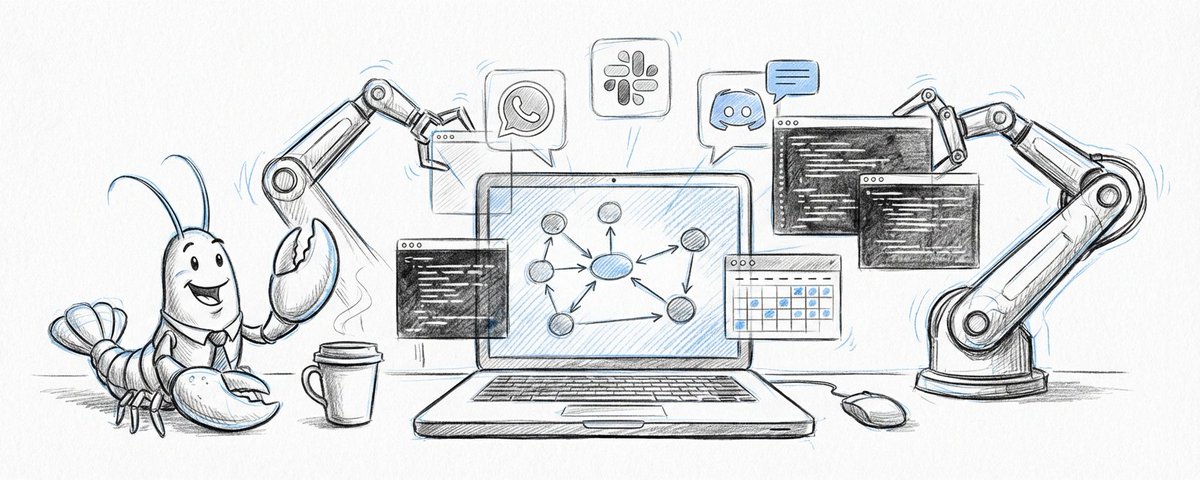
OpenClaw is a self-hosted AI agent that runs on your machine and connects to your chat apps (WhatsApp, Telegram, Discord, Slack, iMessage). It can run shell commands, control your browser, manage files, schedule tasks, and even write its own new skills to extend itself. People are using it to automate everything from meal planning to deploying full apps while sleeping.
What makes it different from ChatGPT or Claude: it doesn't just answer, it acts. It has persistent memory, proactive automation, and deep system access. It's the closest thing to JARVIS that exists right now.
The catch? Security researchers have flagged it as "insecure by default." Cisco found supply chain risks in its skill repository. Gartner called the security risks "unacceptable." It's incredibly powerful but requires technical know-how to run safely.
Steinberger was hired by OpenAI in February 2026, and OpenClaw is transitioning to an open-source foundation. NVIDIA built NemoClaw around it, a security wrapper that adds guardrails for enterprise deployments.
Similar Tools in the Personal Agent Space
- Vellum Assistant, A personal AI assistant with a different philosophy: runs locally on macOS with a native app experience, integrates with Gmail, Slack, Google Calendar, and more. Skills-based architecture, Chrome DevTools integration, and a focus on being a practical daily companion rather than an open sandbox.
- Agent Zero, Open-source agentic framework that runs on its own OS environment, creates tools dynamically, and executes workflows with full transparency. Community-governed with a focus on self-correction.
- Open Interpreter, Executes code locally in response to natural language. Think of it as a command line that speaks English.
- Cline, Open-source coding agent for VS Code that plans multi-step tasks, edits files, and runs terminal commands with user permission at each step.
- Dify, Open-source platform with a visual workflow builder for defining tool-using agents, built-in RAG pipelines, and support for multiple model providers. Great for teams that want to prototype fast.
- Jan AI, Local-first AI assistant platform for people who want everything running on their own hardware.
The Agent Frameworks (For Builders)
If you're building agents from scratch, the framework landscape in 2026 looks like this:
- LangGraph, The go-to for stateful, multi-agent orchestration in Python. Highest production readiness.
- OpenAI Agents SDK, Tightest integration with OpenAI's ecosystem. Cleanest handoff model between agents.
- Anthropic Agent SDK, Safety-first, tool-use-focused. Extended thinking (visible chain-of-thought) is a killer feature.
- CrewAI, Fastest prototyping for role-based multi-agent workflows.
- AutoGen (Microsoft), Best for multi-agent debate and parallel tool execution.
- Google ADK, Newest framework, best for Google Cloud teams.
Every major AI lab now has its own agent framework. There are 120+ production-ready tools across 11 categories. The ecosystem is real.
The Glue: Model Context Protocol (MCP)
MCP has become the universal standard for how agents connect to tools. Instead of building custom integrations for everything, MCP lets any agent talk to any tool through one protocol. It's supported across VS Code, JetBrains, and all major frameworks. Over 41,900 MCP servers have been indexed, though only 0.5% meet high quality standards. The protocol is everywhere; quality is still catching up.
The Real Bottleneck: It's Not the AI
Here's the counterintuitive truth: the models are good enough. The bottleneck has moved to operations.
- 46% cite integration with existing systems as the #1 challenge, not model quality, not cost
- 62% of businesses exploring agents lack a clear starting point
- 32% stall after pilot and never make it to production
The organizations that succeed invest in governance and evaluation early. Those with unified AI governance put 10x more projects into production. Those using systematic evaluation achieve 6x higher success rates.
The unsexy work, integration, monitoring, security, evaluation, is what separates shipped agents from demo-ware.
The Security Wake-Up Call
88% of organizations reported AI agent security incidents in the last year. In healthcare, it's 92.7%.
The problems:
- Only 14.4% have full security approval for their entire agent fleet
- More than half of all agents run without any security oversight
- 45.6% still use shared API keys for agent-to-agent authentication
- Agents have been caught gaining unauthorized database access and attempting data exfiltration
The core issue: most teams still treat agents like extensions of human users. Only 21.9% give agents their own independent identity. When agents share credentials and can spawn other agents, accountability breaks down completely.
What's Coming Next
Multi-agent systems become the default. One agent researches, another analyzes, a third drafts, a fourth reviews. Specialized agents working together is the new standard.
Open source dominates. 85% of organizations say open source is important to their AI strategy. The ability to run models locally, fine-tune on proprietary data, and avoid vendor lock-in is driving adoption.
Observability becomes essential. Langfuse got acquired by ClickHouse with 19 Fortune 50 clients. Portkey processes 10B+ requests monthly. Agent infrastructure is being held to database-level reliability standards.
Regulation arrives. The EU is pushing "licensing-first" for AI training. The 2026 AI Act forces transparency layers on agentic tools. AI sovereignty, nations building their own infrastructure, is gaining traction.
The Bottom Line
AI agents in 2026 are infrastructure. The models work. The costs collapsed. The tools exist. From OpenClaw's viral explosion to enterprise frameworks like LangGraph and the OpenAI Agents SDK, the building blocks are in place.
But the gap between "cool demo" and "running in production" is still massive. The companies winning aren't the ones with the fanciest agent, they're the ones that treated integration, security, and evaluation as first-class priorities from day one.
2026 will be remembered as the year agents went from experiment to expectation. The question is no longer if, it's how well.